
Third grade marks a pivotal year of growth, where children transition from learning to read to reading to learn. Their curiosity is boundless, and their capacity for complex thinking is rapidly expanding. Finding the right activities for 3rd graders to channel this energy is essential for fostering a lifelong passion for discovery. This guide provides a comprehensive roundup of engaging, hands-on activities designed for both the classroom and at home, each crafted to build foundational skills while being genuinely fun.
This list is designed to be a practical resource for parents and educators. We've gathered a variety of ideas that span critical subjects, from STEM building projects and creative writing workshops to outdoor nature exploration and collaborative games. Each activity includes clear objectives, step-by-step instructions, and tips for adapting the challenge to different learning styles. For a broader collection of hands-on ideas to keep your 3rd grader engaged, explore this comprehensive list of educational activities tailored for 6-13 year olds that help build real-world skills.
Whether you're looking to spark an interest in science, encourage artistic expression, or develop social-emotional learning, you'll find actionable inspiration here. Let's dive into a world of discovery that will captivate and challenge your eight- or nine-year-old.
1. STEM Building Projects
STEM building projects are hands-on activities for 3rd graders that blend Science, Technology, Engineering, and Mathematics into exciting, tangible challenges. Instead of learning these subjects in isolation, students apply integrated concepts to solve a specific problem, such as designing a bridge that can support a certain weight or building a simple machine to perform a task. This approach fosters critical thinking, creativity, and resilience as students learn through trial and error.
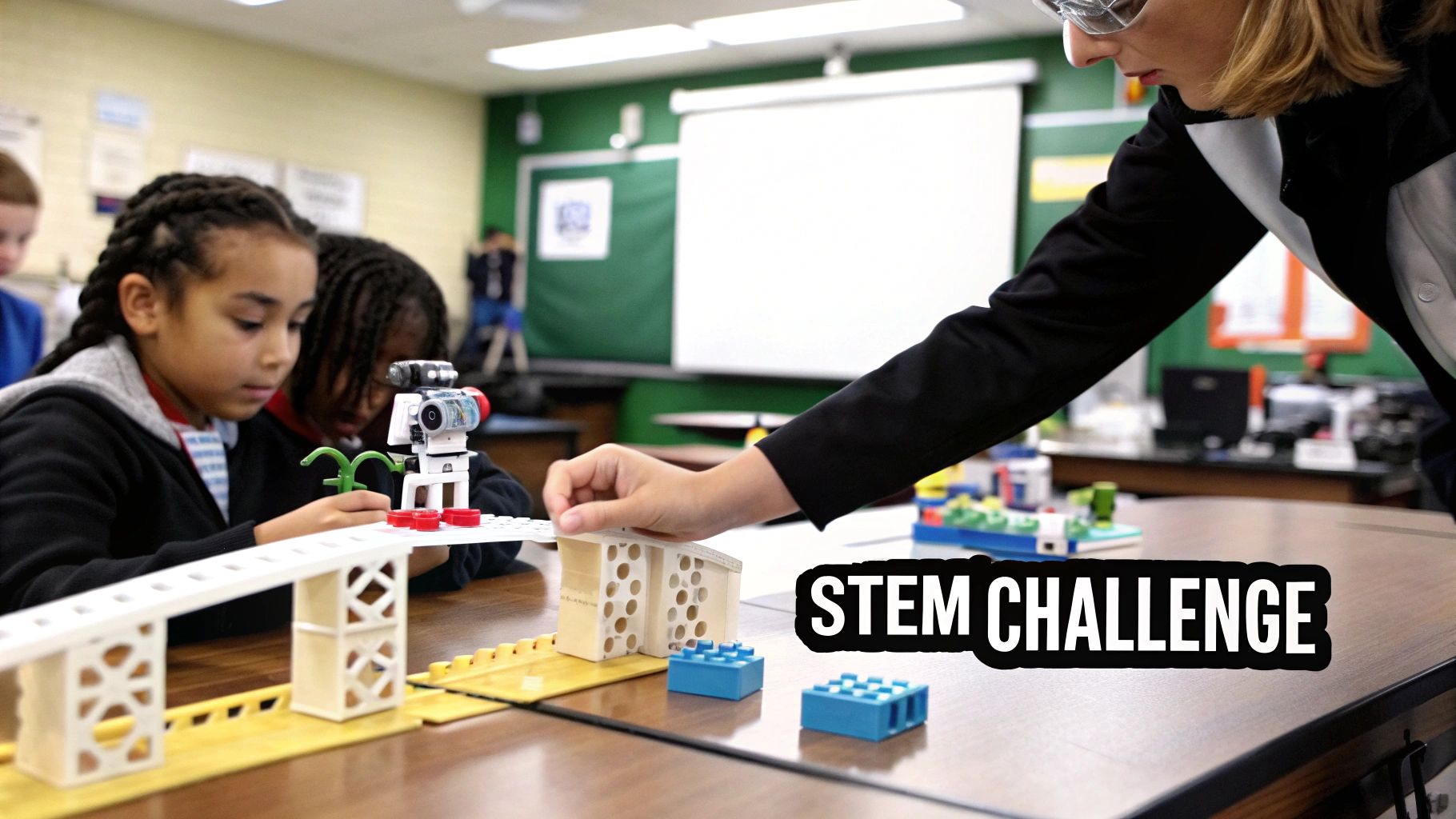
These projects engage third graders by giving them ownership over their learning and producing a visible, functional result. They see directly how scientific principles and mathematical calculations have real-world applications.
How to Get Started
Begin with a simple design brief and readily available materials. The goal is to encourage problem-solving without overwhelming students.
- Cardboard Challenge: Ask students to build the tallest possible freestanding tower using only cardboard, tape, and scissors. Set a clear success criterion, such as "must stand on its own for 60 seconds."
- Simple Machines: Challenge teams to create a lever or pulley system to lift a small object (like an apple) off the table. This introduces basic engineering principles.
- Coding Games: Use platforms like Code.org to introduce foundational programming concepts through fun, block-based puzzles that feel like a game.
Project Tips for Success
To make these activities effective, provide structure while allowing for creativity.
- Establish Clear Goals: Define the project's objective and constraints from the start. What problem are they solving? What are the rules?
- Use Mixed-Ability Groups: Pair students with different strengths. This encourages peer teaching and collaboration, where one student's knack for design complements another's for measurement.
- Document and Reflect: Have students take photos or short videos of their building process. This creates a visual record they can use to reflect on what worked, what didn't, and why.
2. Creative Writing and Storytelling Workshops
Creative writing and storytelling workshops are structured sessions that guide students in developing their narrative skills. Far more than just free-writing time, these activities for 3rd graders introduce concepts like character development, plot mapping, and descriptive language. Students learn to brainstorm ideas, organize their thoughts into a coherent story, and express themselves with confidence and clarity. This process transforms writing from a daunting task into an exciting act of creation.
These workshops help third graders find their unique voice and see themselves as authors. By creating their own stories, poems, or plays, they build a deeper appreciation for literature and develop essential communication skills that apply across all subjects.
How to Get Started
Begin with engaging prompts and collaborative activities to make writing feel accessible and fun. The focus should be on imagination and expression.
- Story Circles: Have students sit in a circle and build a story together, with each person adding one sentence at a time. This low-pressure activity encourages spontaneous creativity.
- Character Creation: Provide students with a template to invent a character. Ask them to draw the character and list their name, personality traits, and a secret wish.
- Writing Prompts: Use "what if" scenarios to spark ideas, such as "What if you woke up one morning and could talk to animals?" or "Write about a magical object you found in your backyard."
Project Tips for Success
To foster a vibrant writing community, prioritize encouragement over perfection.
- Create a Safe Space: Establish a non-judgmental environment where students feel comfortable sharing their work, even if it's unfinished. Celebrate all attempts equally.
- Use Mentor Texts: Share examples of great writing from children's books to show students what's possible. Analyze how authors use dialogue or description to make a story interesting.
- Establish a Routine: Dedicate consistent, short blocks of time to writing each week. Regular practice helps build writing stamina and makes it a familiar part of the school day.
3. Outdoor Adventure and Nature Exploration
Outdoor adventure and nature exploration activities connect third graders to the natural world, combining physical activity with environmental science and sensory learning. These activities range from guided nature walks and scavenger hunts to gardening and bird watching. They encourage students to use their observation skills, ask questions about ecosystems, and develop an appreciation for their local environment, an approach championed by educators like David Sobel and authors like Richard Louv.
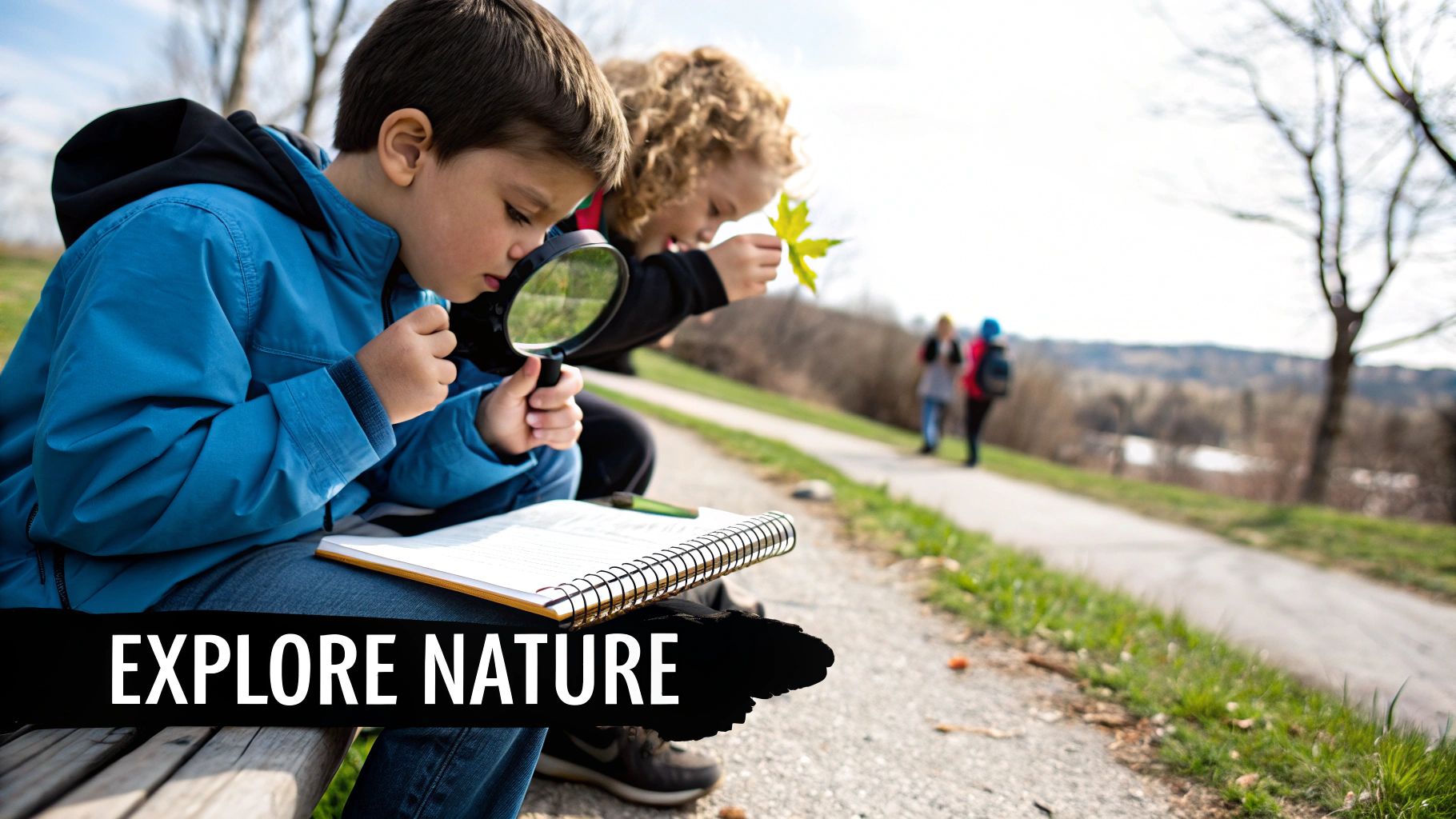
These hands-on activities for 3rd graders turn the outdoors into a living classroom. By directly interacting with plants, insects, and natural cycles, students build a tangible understanding of scientific concepts that can seem abstract in a textbook.
How to Get Started
Begin with simple, structured explorations that build confidence and curiosity. The key is to make nature accessible and engaging, even in an urban schoolyard.
- Nature Scavenger Hunt: Create a list of items for students to find, such as a smooth stone, a Y-shaped twig, three different types of leaves, and something a bird might eat.
- Create a Nature Journal: Give each student a blank notebook and pencil to sketch or write about what they see, hear, and feel outdoors. This promotes mindfulness and detailed observation.
- Citizen Science: Participate in a project like Cornell Lab of Ornithology's bird count. This gives their observations a real-world scientific purpose.
Project Tips for Success
To ensure these adventures are both fun and educational, focus on safety and guided discovery.
- Establish Clear Boundaries: Before starting, clearly define the physical area for exploration and review safety protocols, such as not touching unknown plants.
- Use Field Guides: Provide simple, illustrated field guides for local birds, insects, or plants to help students identify their discoveries and learn proper terminology.
- Plan Around Seasons: Design activities that highlight seasonal changes, such as documenting leaf color in the fall, searching for animal tracks in winter, or observing budding plants in spring.
4. Collaborative Team Sports and Games
Collaborative team sports are structured physical activities for 3rd graders that teach teamwork, fair play, and motor skills in a fun, group-based setting. Instead of focusing solely on winning, these games prioritize cooperation, communication, and inclusive participation. Students learn to work together toward a common goal, whether it's scoring a point in soccer or successfully completing a non-competitive challenge game, building both physical and social-emotional skills.
This approach helps third graders develop resilience and a positive attitude toward physical activity. By emphasizing effort and participation over victory, every child can feel successful and valued, which is crucial for building confidence and a lifelong love of movement.
How to Get Started
Introduce games where success depends on the entire group, not just a few star players. This ensures everyone feels essential to the outcome.
- Human Knot: Have a group of 8-10 students stand in a circle, reach across to grab the hands of two different people, and then work together to untangle themselves into a single circle without letting go.
- Keep-Up Challenge: Using a balloon or a soft beach ball, challenge the entire class to keep it from touching the ground. The goal is a collective one: to achieve the highest number of consecutive taps.
- Adapted Soccer: Play a small-sided soccer game where the rule is that every player on the team must touch the ball before the team can attempt to score a goal.
Project Tips for Success
To ensure these games are positive and developmental, focus on structure, sportsmanship, and inclusion.
- Teach and Reinforce Sportsmanship: Before starting, define what good sportsmanship looks like (e.g., high-fives, encouraging teammates, respecting rules). Praise these behaviors publicly during and after the game.
- Rotate Roles and Teams: Frequently change team assignments to prevent cliques and give students a chance to work with everyone. Assign different roles like captain, scorekeeper, or equipment manager.
- Adapt Rules for Inclusion: Modify rules to suit all ability levels. For example, in floor hockey, you might implement a "no-lift" rule for the stick or use a larger, softer ball to make it accessible for everyone.
5. Music and Performing Arts Programs
Music and performing arts programs offer creative activities for 3rd graders that build confidence, discipline, and emotional expression. These activities move beyond standard academics, engaging students through instrument instruction, choir, drama, and dance. By participating, third graders learn to collaborate in an ensemble, understand rhythm and storytelling, and gain the courage to perform in front of an audience.
This type of engagement provides a vital outlet for self-expression and helps develop auditory and kinesthetic learning skills. Whether mastering a new song on the recorder or acting out a scene, students connect with material on a deeper, more personal level.
How to Get Started
Introduce performance arts in a low-pressure, accessible way that prioritizes fun and participation over technical perfection.
- Classroom Talent Show: Host an informal talent show where students can share any skill, from singing a song to telling jokes. This creates a supportive first-time performance experience.
- School Choir or Band: Encourage joining school music programs. Many, like those supported by the VH1 Save The Music Foundation, provide instruments and structured learning.
- Drama Club: Start a simple drama club focusing on improvisation games and short skits. This builds acting fundamentals without the pressure of a full production.
Program Tips for Success
To ensure these programs are enriching, focus on inclusivity and process rather than just the final performance.
- Incorporate Diverse Genres: Introduce music and stories from various cultures to broaden students' cultural awareness and appreciation.
- Partner with Community Artists: Invite local musicians or actors to run a workshop or perform for the class, showing students a real-world application of the arts.
- Focus on Enjoyment: Emphasize the joy of creating and collaborating. Celebrate effort and courage, reminding students that the goal is to have fun and express themselves.
6. Service Learning and Community Projects
Service learning and community projects are powerful activities for 3rd graders that connect classroom learning with real-world civic responsibility. Instead of just learning about their community, students actively identify local needs and work together to implement meaningful solutions. This approach helps develop empathy, leadership, and a sense of agency as students see they can make a positive impact.
These projects are highly engaging because they provide a clear purpose for learning. Students understand why they are practicing writing, math, or science skills when they use them to organize a food drive, calculate donations, or clean up a local park.
How to Get Started
Begin with small, achievable projects that directly connect to your students' immediate environment. The key is to empower them to take the lead in solving a problem they care about.
- Campus Cleanup: Organize a "beautification day" where students identify areas around the school that need care, such as picking up litter or weeding garden beds.
- Donation Drive: Guide students in planning and running a canned food or coat drive. They can create posters, write announcements, and sort the collected items.
- Senior Citizen Pen Pals: Partner with a local senior center to start a letter-writing exchange. This builds writing skills while fostering intergenerational connections.
Project Tips for Success
To ensure projects are authentic and impactful, focus on student voice and meaningful reflection.
- Connect to Passions: Survey students to discover what community issues they care about most. A project driven by their interests will have greater buy-in.
- Include Reflection: Before, during, and after the project, facilitate discussions. Ask questions like, "What problem are we solving?" and "How did our actions help?"
- Partner with Organizations: Collaborate with established local groups like food banks or environmental non-profits. Organizations like Jane Goodall's Roots & Shoots provide excellent resources for youth-led projects.
7. Arts and Crafts Projects
Arts and crafts projects are hands-on creative activities for 3rd graders that encompass painting, drawing, sculpture, and collage. These activities emphasize the creative process over the final product, allowing students to experiment with different materials, develop fine motor skills, and express their unique perspectives. This approach nurtures creativity, self-confidence, and an appreciation for visual communication while connecting with cultural and historical contexts.
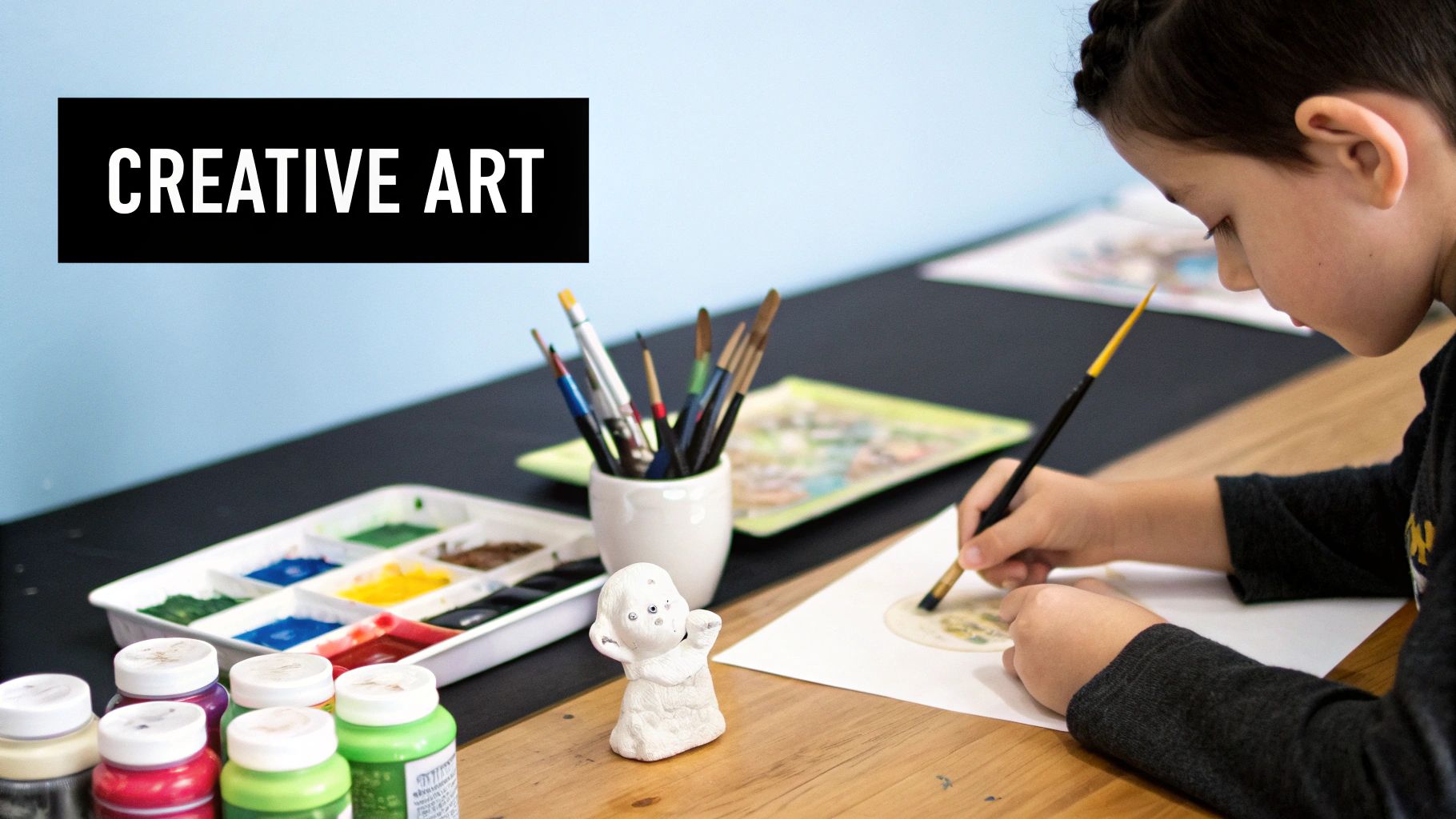
Engaging in art allows third graders to explore their thoughts and feelings visually, offering a powerful outlet for self-expression. They learn that there are multiple solutions to a creative problem and that their individual voice has value, a lesson championed by organizations like the National Art Education Association (NAEA).
How to Get Started
Begin with open-ended prompts and accessible materials that encourage experimentation rather than replication. The focus should be on exploration and personal interpretation.
- Mixed-Media Self-Portraits: Have students create self-portraits using a combination of drawing, paint, magazine clippings, and fabric scraps. This encourages them to think symbolically about their identity.
- Nature Sculptures: Challenge students to build small sculptures using only natural materials found outside, such as twigs, leaves, stones, and clay.
- Printmaking with Found Objects: Use everyday items like bottle caps, bubble wrap, or leaves as stamps. Students can dip them in paint and create patterns and unique prints on paper.
Project Tips for Success
To ensure these art activities are enriching, create a supportive and non-judgmental environment where exploration is celebrated.
- Provide Open-Ended Prompts: Instead of asking everyone to draw the same flower, ask, "How can you show the feeling of happiness using only colors and shapes?"
- Use Recycled Materials: Incorporate cardboard tubes, old newspapers, and plastic containers to reduce costs and teach students about sustainability and resourcefulness.
- Display All Work Respectfully: Showcase every child's creation equally. This validates their effort and reinforces the idea that all artistic expressions are important.
8. Book Clubs and Literature Circles
Book clubs and literature circles are collaborative activities for 3rd graders that transform reading from a solitary task into a dynamic group discussion. Students form small groups to read the same book and then meet to discuss it, often guided by specific roles like "Discussion Director" or "Vocabulary Finder." This approach deepens reading comprehension, encourages critical thinking, and fosters a community of readers who learn from one another's perspectives.
These discussions empower students by giving them ownership of their learning. As they share insights and question the text, they build confidence and develop essential communication skills, turning reading into a shared, exciting experience.
How to Get Started
Begin by introducing the concept with a short, high-interest book and clearly defined roles. The goal is to structure the conversation so everyone contributes meaningfully.
- Assign Specific Roles: Create role cards that define each student's job. For example, the "Connector" finds connections between the book and their own life, the "Illustrator" draws a key scene, and the "Summarizer" recaps the main events.
- Use High-Interest Books: Start with popular series or graphic novels that are accessible and engaging for this age group to build enthusiasm.
- Model a Discussion: Before students meet independently, model a literature circle discussion with a small group in front of the class. Show them how to ask open-ended questions and listen respectfully.
Project Tips for Success
To ensure discussions are productive and inclusive, provide clear guidelines and support.
- Establish Discussion Norms: Create an anchor chart with rules like "Listen when others are talking" and "It's okay to disagree respectfully."
- Provide Sentence Starters: Offer students prompts like "I wonder why..." or "This part reminds me of..." to help them articulate their thoughts and deepen the conversation.
- Rotate Roles Regularly: Have students switch roles for each meeting or with each new book. This allows them to practice different comprehension skills and keeps the activity fresh and engaging.
9. Science Experiments and Discovery Lab
A Science Experiments and Discovery Lab provides hands-on activities for 3rd graders that bring abstract scientific concepts to life. This inquiry-based approach encourages students to ask questions, form a hypothesis, conduct an experiment, and analyze the results. Instead of just reading about science, they actively engage with it, exploring everything from chemical reactions to basic physics through direct observation and participation.

This method makes learning memorable and fosters a deep, intuitive understanding of the scientific method. It shifts the focus from memorizing facts to understanding processes, which builds critical thinking and problem-solving skills essential for all areas of learning.
How to Get Started
Begin with simple, high-impact experiments that use common household materials. The key is to spark curiosity and build confidence.
- Volcano Eruption: Create a classic volcano model and use baking soda and vinegar for a dramatic chemical reaction demonstration.
- Crystal Growing: Have students dissolve salt or sugar in hot water and observe as crystals form on a string over several days. This teaches about solutions and states of matter.
- Water Filtration: Challenge students to design a simple filter using materials like gravel, sand, and cotton balls to clean muddy water.
Project Tips for Success
To ensure experiments are both fun and educational, focus on safety, process, and reflection.
- Emphasize Safety: Always use safety equipment like goggles and establish clear protocols before starting any experiment.
- Create Prediction Journals: Before an experiment, have students write or draw what they think will happen. This encourages hypothesis-formation.
- Connect to the Real World: Discuss how the principles from the experiment apply to everyday life, like how salting roads in winter relates to a crystal experiment.
10. Social-Emotional Learning and Mindfulness Activities
Social-Emotional Learning (SEL) and mindfulness activities for 3rd graders focus on developing emotional intelligence, self-awareness, and relationship skills. These structured practices, which include breathing exercises, gratitude journaling, and conflict resolution, help students understand and manage their feelings, set positive goals, and make responsible decisions. By integrating these skills into the daily routine, you create a more supportive and empathetic classroom environment.
This approach teaches third graders that their emotions are valid and provides them with the tools to navigate complex social situations. It directly supports academic learning by improving focus, reducing anxiety, and fostering a sense of community and safety.
How to Get Started
Begin with short, simple practices that can be easily integrated into the existing school day, like during morning meetings or transitions. The key is consistency.
- Breathing Buddies: Have students lie on their backs and place a small stuffed animal on their belly. Ask them to breathe slowly and deeply, watching their "breathing buddy" gently rise and fall.
- Gratitude Circle: Once a week, gather students in a circle and have each one share something they are grateful for. This builds a positive mindset and encourages active listening.
- Feelings Chart: Use a feelings chart to help students identify and name their emotions. This is a foundational step in developing emotional literacy.
Project Tips for Success
To make these activities impactful, model the behaviors yourself and create a safe space for emotional expression.
- Start Small: Introduce mindfulness with 2-3 minute guided breathing or listening exercises. Gradually increase the duration as students become more comfortable.
- Create a Calm-Down Corner: Designate a quiet area in the classroom with sensory tools like stress balls, soft pillows, and coloring pages where students can go to self-regulate.
- Use Literature: Read children's books that explore complex emotions and social scenarios. Use them as springboards for discussions about empathy, kindness, and problem-solving. For a comprehensive list of ideas that foster emotional well-being, explore these 10 fun kids mental health activities.
Top 10 3rd Grade Activities Comparison
| Activity | 🔄 Implementation Complexity | ⚡ Resource Requirements | ⭐ Expected Outcomes | 📊 Ideal Use Cases | 💡 Key Advantages / Tips |
|---|---|---|---|---|---|
| STEM Building Projects | Moderate–High: lesson design, troubleshooting, safety | Moderate–High: kits/tools, teacher training, storage | High ⭐⭐⭐: problem-solving, STEM readiness, engagement | Makerspaces, robotics clubs, STEM weeks, competitions | Start with low-cost materials; use mixed-ability teams; set clear design briefs |
| Creative Writing & Storytelling Workshops | Low–Moderate: planning prompts, facilitating feedback | Low: paper, prompts, teacher time | Moderate–High ⭐⭐⭐: literacy, self-expression, confidence | Literacy blocks, writing clubs, cross-curricular units | Use mentor texts, create safe sharing norms, regular routines |
| Outdoor Adventure & Nature Exploration | Moderate: logistics, risk management, seasonal planning | Moderate: outdoor sites, transport, field guides, supervision | High ⭐⭐⭐: fitness, observation, environmental awareness | Field trips, forest school, seasonal science units | Establish safety protocols, use nature journals, partner with local experts |
| Collaborative Team Sports & Games | Moderate: rules, inclusion strategies, supervision | Moderate: equipment, space, trained supervisors | High ⭐⭐⭐: teamwork, motor skills, SEL development | PE classes, recess, intramurals, inclusive leagues | Rotate teams, emphasize cooperation over competition, adapt roles |
| Music & Performing Arts Programs | Moderate–High: curriculum, rehearsal scheduling | Moderate–High: instruments, space, specialized instructors | High ⭐⭐⭐: cognitive gains, discipline, confidence | School bands, theater productions, arts integration | Partner with community artists, offer low-pressure performance options |
| Service Learning & Community Projects | High: planning, partnerships, ethical considerations | Moderate–High: transport, coordination, community ties | High ⭐⭐⭐: civic responsibility, leadership, real-world impact | Community outreach, cross-curricular projects, capstone activities | Partner with nonprofits, include reflection, document impact |
| Arts & Crafts Projects | Low: simple prep; messy management | Low: art supplies, workspace, cleanup materials | Moderate ⭐⭐: fine motor, creativity, sensory benefits | Art class, centers, therapeutic sessions | Use open-ended prompts, recycled materials, display student work |
| Book Clubs & Literature Circles | Moderate: selecting texts, structuring roles, facilitation | Low–Moderate: books, teacher time, guided materials | High ⭐⭐⭐: comprehension, critical thinking, speaking/listening | Reading units, library clubs, differentiated reading groups | Provide role cards, teach discussion protocols, rotate responsibilities |
| Science Experiments & Discovery Lab | Moderate–High: safety planning, protocol design | Moderate: materials, safety gear, storage | High ⭐⭐⭐: inquiry skills, scientific reasoning, engagement | Science units, inquiry weeks, after-school labs | Demonstrate first, use prediction journals, enforce safety procedures |
| Social-Emotional Learning & Mindfulness Activities | Low–Moderate: consistency and teacher comfort required | Low: minimal materials, training time, routines | High ⭐⭐⭐: self-regulation, reduced anxiety, better focus | Morning meetings, behavior interventions, whole-class routines | Start with short exercises, model practices, integrate into transitions |
Fostering a Lifelong Passion for Discovery
The journey through third grade marks a pivotal moment in a child's development, a time when curiosity blossoms into genuine understanding. The extensive collection of activities for 3rd graders detailed in this article, from STEM building projects to collaborative service learning, provides a robust framework for nurturing this crucial stage. We've explored how hands-on science experiments demystify complex concepts, how creative writing workshops unlock self-expression, and how outdoor adventures connect classroom learning to the natural world. Each activity is designed not just to teach a specific skill but to ignite a deeper passion for discovery that extends far beyond the classroom walls.
The true power of these activities lies in their adaptability and their focus on the whole child. By integrating academic subjects with artistic expression, physical movement, and social-emotional learning, you create a rich, multi-faceted educational experience. A child building a simple machine is learning physics, but they are also learning persistence and problem-solving. A group of students participating in a book club is improving reading comprehension while also honing their communication and empathy skills. This integrated approach ensures that learning is not a siloed, static process but a dynamic, interconnected adventure.
Key Takeaways for Lasting Impact
As you implement these ideas, remember the core principles that make them effective. The goal is to move beyond simple task completion and cultivate an environment where exploration is celebrated.
- Embrace Curiosity: The most impactful learning happens when a child's own questions lead the way. Use these activities as a launchpad, encouraging students to ask "what if?" and "why?" and then providing them with the tools to find the answers.
- Process Over Perfection: Whether it's a messy art project or a science experiment that doesn't go as planned, emphasize the value of the learning process itself. Celebrate effort, resilience, and the creative thinking that emerges from challenges.
- Make Real-World Connections: Always strive to connect activities back to the world around them. Show how math is used in cooking, how storytelling is part of history, and how science explains everyday phenomena. This relevance transforms abstract concepts into tangible, meaningful knowledge.
Your Next Steps in Fostering Growth
Moving forward, the challenge is to consistently and intentionally weave these experiences into your child's or students' routines. Start small by selecting one or two new activities for 3rd graders each week that align with their current interests or curriculum. Observe what sparks their excitement and build from there. The ultimate objective is not just to keep them busy but to empower them with the confidence and skills to become lifelong learners, critical thinkers, and compassionate individuals. By providing diverse, engaging, and meaningful opportunities, you are building the foundation for their future success, one discovery at a time.
Ready to take the guesswork out of educational fun? The curated activity kits from Learning Through Play provide everything you need to bring these concepts to life. Explore our collection of grade-specific STEM, art, and literacy boxes designed to make hands-on learning easy and exciting at Learning Through Play.
Article created using Outrank